Categories
Mechanical design

Mechanical design 2 Characteristics and selection of copper for mechanical parts
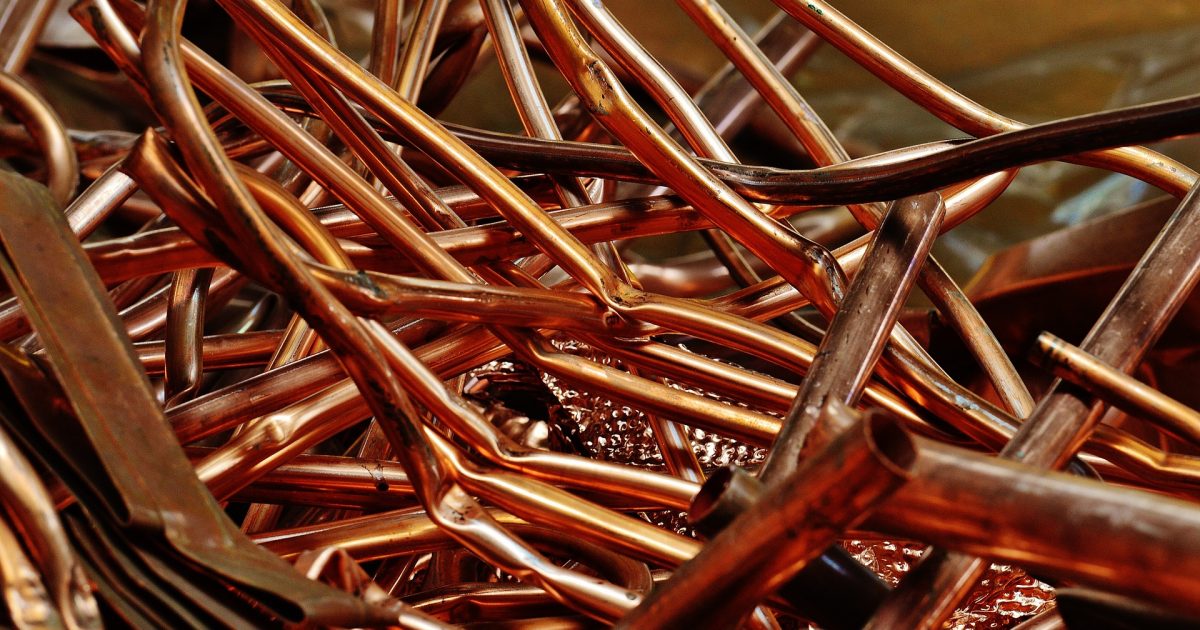
Characteristics and Selection of Copper for Machine Parts

Like Aluminum, I think that it is always touched copper (Cu) related products as much as I can say everyday.
I would like to explain how to select when actually using it in development design, together with the characteristics this time.

Chemical properties

Copper is widely used in general and its usage is various considering chemical properties.
But because of its features, I would like to talk about its chemical properties compared to the materials used for mechanical parts here.

Weight

The specific gravity of copper is about 120% of iron, about 200% of titanium, about 330% of aluminum and about 460% of carbon fiber.
Specific gravity of copper: 8.8 g / cm 3

In terms of weight, it is the heaviest among these, and there is no merit.

In order of specific gravity:
copper> iron> titanium> copper> carbon fiber

Weight is about 120% heavier than iron

Conductivity / thermal conductivity

It has high conductivity and thermal conductivity under normal circumstances.
It depends on the condition, but as you know it is very expensive.
I will compare and explain.

Conductivity
The electrical resistivity of copper is about 0.0003% of carbon fiber, about 4% of titanium, about 18% of iron and about 60% of aluminum.
Copper electric resistivity: 16.8 nΩ · m

Among the metals commonly used under normal temperature environment, copper has good electrical conductivity after silver.
Therefore, copper is used for general electric cables and electric wires.

Electrical resistivity order:
carbon fiber> titanium> iron> copper> copper

· Thermal conductivity
The thermal conductivity of copper is about 80% of carbon fiber, about 170% of aluminum, about 500% of iron, about 1900% of titanium.
Copper is used in many products that efficiently convey heat.
Copper thermal conductivity: 400 W / (m · K)

The order of thermal conductivity:
carbon fiber> copper> copper> iron> titanium

Of the metals that are normally used, the electrical conductivity and thermal conductivity are the best.

Chemical properties

· Corrosivity
Copper has low ionization tendency after gold, silver and is relatively strong against acid and alkali.
In the air, a copper oxide film gradually forms on the surface and the inside is protected, so there is no further corrosion progression.

In order of ionization tendency
copper> titanium> iron> copper

Magnetic
Copper is a diamagnetic body and when it applies a magnetic field, it is weak, but it will be the opposite magnetic only then at that time to repel its magnetic field.
Even if a magnet is attached, it is not magnetized.
Therefore, it is often used around sensors such as measuring instruments.

High corrosion resistance. There is no magnetism.

Mechanical properties

Copper is an essential part of mechanical parts by using mechanical properties.
I will explain what it is like.

Strength

Copper strength is somewhat inferior to iron.
Depending on the alloy, the specific strength of copper is the same as that of iron.
Therefore, considering the same volume, heavier copper will weaken the strength.

Processability

It is very soft and processability is bad with copper alone.
By making it a copper alloy, the processability is improved while taking advantage of the goodness of copper, and the application is wide. In the case of
Because of high thermal conductivity, warping and deformation are more likely to occur when processing than iron.
It is almost impossible in cutting, cutting and die punching, such as drawing, grinding, bending, welding, etc.

Copper can be easily cast.
Its melting point is lower than that of iron, so castability is high like iron.
However, since the coefficient of thermal expansion is a little high, distortion is likely to occur due to welding or the like.
Moreover, it is hard to heat local heating because of high thermal conductivity.

Processability is high, casting is relatively easy, but caution is also required for processing requiring heat

Price

It depends on circumstances and alloys, not everything applies, but it will be below.

In order of price per weight
carbon fiber> titanium> copper> aluminum> stainless steel> iron

Copper is widely used in various fields than features.
For that reason it is relatively expensive than others.

Copper is relatively expensive

Other

· Antibacterial
Copper is said to have antimicrobial properties.
It is said to inactivate a wide range of microorganisms by oxide film and chlorine compound generated on the surface.

· Color changes with aging
When placing copper in the air for many years, the color changes with time due to the influence of the oxide film generated on the surface.
It turns reddish brown → green and blue in about ten years.
Merits / Demerits Although it can be caught in either case, copper has a distinctive hue.

· Easy to recycle
Like aluminum, copper is easy to recycle.
It is easy to extract as copper alone, so it is recycled a lot.

· Very strong under low temperature environment
Copper does not become brittle even under low temperature environments.
Therefore, it is also used for superconducting materials and so on.

However, for copper and copper alloys that are usually used, let’s not use it in an environment where the temperature is high because its maximum temperature is about 300 degrees.

easy to recycle

At what time did you choose copper?


· I want to pass a lot of electricity per volume
Among the metals commonly used under normal temperature environment, copper is often used for electric cables and the like because it has good electrical conductivity next to silver.
However, when comparing per weight, aluminum conducts electricity.
I think that it is necessary to think by weight or volume.

· I want to convey fever efficiently
Copper has very good thermal conductivity as well as conductivity.
It is also often used for heat sinks and heat exchangers.

· I want to use it for parts of measuring equipment
Copper has diamagnetism, but it is not magnetized by the magnet.
Therefore, it is suitable for parts of measuring instruments that affect magnetic force.

· Want to use materials that can be maintained in low temperature environment
As I mentioned earlier, copper does not become brittle in very cold environments.
Therefore, it is strong even at low temperature.
However, let’s notice how to use because it is relatively weak in places like high temperature.

There are many others, too.

Copper is used in a wide variety of applications.
Please try variously in consideration of the situation depending on the situation.
It is the third most widely used material after iron and aluminum.
Because quality is stable, replacement design can be done comparatively easily.

Usage is diverse. Easy to replace

Below is a tumbler using the thermal conductivity characteristic of copper.
The cold thing is cold, and it is more tasty with the coldness feeling on the lip just before drinking.
和平フレイズ ラウンドロックタンブラー 380ml 燕三 純銅 EM-9606

Standard (alloy)

Copper alloy is copper based alloy.
Copper alloys are very common, for example Japanese coins other than 1 yen coin will be copper alloys.

Because copper is soft, it can be alloyed with manganese, tin, magnesium, zinc, nickel or the like to improve the properties as a metal material.
Copper alloys can roughly be roughly divided into a rolling (drawing) method and a casting method, as with aluminum, and are material specifications for each application.

銅の規格で、銅記号、系統記号、形状記号、調質記号からなります。

· Copper sign
It will be the initial letter C.
· Alloy · Alloy number
It will be the number of the alloy. The type of alloy is determined by the number at the head of this number.
· Shape · Manufacturing condition code
P: Plate, disc
PC: laminating board
H: Foil
FD: Die forged wrought goods
FH: Free dedicated goods
Such
– Condition symbol
F: Production as it is
O: Annealing
H: Work hardening
Such

Alloy of rolling (drawing) method

Here, we will explain the standard of “rolling (drawing) method” which is particularly frequently used.
Among the alloys of the rolling (drawing) method, there are non-heat treated alloys and heat treated alloys.

銅の延伸法では1000系-7000系まであります。マンガン、すず、マグネシウム、亜鉛、ニッケルなどと合金にして、金属材料としての特性を向上させます。

Copper alloy of the rolling method uses the name of the international copper alloy with a four-digit number.
Commercially available plate thickness is 0.3, 0.8, 1.0, 2, 3, 4, 5, 6, 8, 10, 12, 15, 16, 18, 20, 22, 25, 30, 35, 40, 45, 50 mm is.
There are other board thicknesses, but it is easy to design, considering this too.

• 1000 series (pure copper)
When the copper purity is 99.9% or more, the electrical conductivity and thermal conductivity are good but the strength is low.
It is used as a conductive material or an aluminum foil, and it is not suitable as a structure or machine part.

C1020: Core wire of electric wire

· 2000 series (Cu – Zn alloy)
It becomes an alloy of copper and zinc.
Also referred to as brass or brass, it is most widely used among copper alloys.
Because of its good processability and beautiful, it is widely used, and it is also used for hardware.
Cracking may occur due to the residual stress at the time of processing, just by placing the alloy processed and so on.
This is a type of stress corrosion cracking, let’s design with internal stress taken into account during processing.

C2600: Connection terminal
C2680: Wiring equipment parts

• Series 3000 (Cu – Pb alloy)
It will be a copper alloy with lead added to improve workability.
It is also called free cutting brass.

C3560: Gear gear etc.

4000 series (Cu – Zn – Sn alloy)
2000 series (brass) with tin added.
Therefore, the resistance to corrosion in sea water has been increased more than brass.
Besides, it becomes an alloy which is resistant to stress corrosion cracking and abrasion.

C4250: Relays, switches
C 4621: Part for marine use

• 5000 series (Cu – Sn alloy, Cu – Sn – P alloy)
It is made by adding tin and phosphorus.
Also called phosphor bronze, it has strong strength and excellent spring properties.
Moreover, it is used for various things because it has good workability such as bending and drawing and high electric conductivity.

C 5191: wiring equipment parts etc.

• 6000 series (Cu – Al alloy, Cu – Si alloy)

6000 series such as C 6161 and C 6191 are made of aluminum bronze or brass for instrument valves, high strength brass

• 7000 series (Cu – Ni alloy, Cu – Ni – Zn alloy)
It becomes nickel plus it, it is also called white copper.
Also nickel plus zinc is also called western silver.
Since these colors become whitish, they are used as a substitute for silver from the appearance.

It is used for ornaments and tableware for beautiful things.
It also has strong corrosion resistance and seawater resistance.

C7351: Musical instrument

Copper has different characteristics in terms of color, corrosivity and conductivity depending on the alloy

Alloy of casting method

Below is the alloy standard of the casting method.
As a characteristic, it is almost the same as the alloy of the rolling (drawing) method, so it only lists the name.

“CAC” is attached to the name

CAC 101: pure copper system
CAC 201: Cu-Zn series
CAC 301: Cu-Zn-Al type
CAC 401: Cu-Sn series
CAC 502 A: Cu – Sn – P system
ACAC 602: Cu – Sn – Pb type
CAC 701: Cu-Al series
CAC 801: Cu – Zn – Si series
CAC 901: Cu-Sn-Bi type

Copper is used very much in various fields.
I think that a better copper alloy will be produced in the future.

Copper products are used as various processed products as follows.

Categories
Mechanical design

Mechanical design1 Aluminum characteristics and selection for mechanical parts

Characteristics and Selection of Aluminum for Machine Parts

I think that I touch things related to aluminum so much as to say always in everyday life everyday.
I would like to explain how to prune with the characteristics when actually using it in development design.

Chemical properties

Aluminum is widely used in general and there are various ways of using it considering chemical properties.
Here I would like to talk about its chemical properties compared to the materials used for mechanical parts.

Weight

The specific gravity of aluminum is about 30% of copper, about 35% of iron, about 60% of titanium and about 140% of carbon fiber.
Aluminum specific gravity: 2.7 g / cm 3

Replacing high-speed rotating parts with iron to aluminum will also reduce inertia and improve efficiency.
It is often used to simply lighten the weight.

In order of specific gravity:
copper> iron> titanium> aluminum> carbon fiber

Weight is about 1/3 of iron and copper

Conductivity / thermal conductivity

It has high conductivity and thermal conductivity under normal circumstances.
It depends on state and alloy, but we will explain in roughly.

Conductivity
The electrical resistivity of aluminum is about 170% of copper, about 30% of iron, about 7% of titanium and about 0.001% of carbon fiber.
Aluminum electrical resistivity: 28.2 nΩ · m

Copper has better electrical conductivity, but because of its specific gravity the aluminum has better electrical conductivity per weight.
Therefore, the higher the voltage, the more aluminum is used

Electrical resistivity order:
carbon fiber> titanium> iron> aluminum> copper

· Thermal conductivity
The thermal conductivity of aluminum is about 60% of copper, about 300% of iron, about 1000% of titanium, about 50% of carbon fiber.
Aluminum products are used in many of the heat transfer products.

The order of thermal conductivity:
carbon fiber> copper> aluminum> iron> titanium

Electrical conductivity is better than copper per weight. Thermal conductivity is also good next to copper.

Chemical properties

· Corrosivity
Aluminum has a high ionization tendency and is susceptible to acid and alkali.
However, it is said that corrosion resistance is generally high, because an oxide film (alumite) is formed on the surface in the air and the inside is protected.

In order of ionization tendency
aluminum> titanium> iron> copper

Magnetic
Aluminum is a weak magnetic material, but you can think that it is almost none.
Therefore, it is also adopted in many measuring instruments.

High corrosion resistance in the air. There is no magnetism.

Mechanical properties

Aluminum is a necessity for mechanical parts by using mechanical properties.
I will explain what it is like.

Strength

The strength of aluminum is low, but the aluminum alloy improves the strength while making good use of lightness and processability, and the application is wide.
It does not show a yielding phenomenon (a phenomenon that the relation between strain and stress does not become proportional and a strain remains even if stress is removed) when deformed when stress is applied. In the case of
The specific strength per unit weight is large, the tensile strength is not large.

Processability

Aluminum has high processability.
It is almost impossible in cutting, cutting and die punching, such as drawing, grinding, bending, welding, etc.

Aluminum can be easily cast.
The melting point is about half that of iron, so castability is high.

High processability, easy casting

Price

It depends on circumstances and alloys, not everything applies, but it will be below.

In order of price per weight
carbon fiber> titanium> copper> aluminum> stainless steel> iron

Due to the difference in specific gravity, the volume per stainless steel is higher than aluminum.

Aluminum is relatively inexpensive

Other

High radio reflection performance
Aluminum is also good at mirror finishing.
Therefore, it easily reflects electromagnetic waves and visible light.

· No toxicity
Aluminum is said to be non-toxic.
Many foods are also adopted in the field.

· Easy to recycle
Aluminum is easy to recycle.
We use a lot of electricity when making from raw materials, but when recycling

– Powder is inflammable
Aluminum powder may cause dust explosion.
When water is applied to extinguish at the time of burning, hydrogen is generated and damage is increased, so it is strictly prohibited to apply water.
It is designated as a dangerous good under the Fire Law.

It is not toxic and easy to recycle

At what time did you choose aluminum?


· Want to lighten
Iron, stainless steel, because it is lighter than titanium, it is very good if you simply want to lighten it. Because the specific strength per weight is also high, replacement design with light weight can be achieved.

· Want to convey heat as cheaply as possible
Although the thermal conductivity is inferior to copper, the merit as a price is often used for heat sink etc. because it exceeds copper.

· Want to lighten electric cable
Conductivity per weight is better than copper.
However, since it is weak in pulling etc., it can only be used fixed.

There are many others, too.

The use of aluminum is diverse and this is not the limit.
Please try variously in consideration of the situation depending on the situation.
As the material is generalized and the quality is stable, replacement design can be done comparatively easily.

Usage is diverse. Easy to replace

Below is detailed about aluminum as a metal material.
Please refer to those who want to know more detailed contents.
Recycling by Material: Aluminium Recycling, Concrete Recycling, Ferrous Metal Recycling, Glass Recycling, Refrigerant Reclamation, Timber Rec

Standard (alloy)

Aluminum alloy is an alloy containing aluminum as a main component.
Aluminum is characterized by being light, but it is soft, but it can be alloyed with copper, manganese, silicon, magnesium, zinc, nickel or the like to improve its properties as a metal material.
Aluminum alloy can roughly be roughly divided into the rolling (drawing) method and the casting method, and it is a material standard for each application.

The standard symbol is as follows.
Aluminum symbol, alloy type / alloy number, shape · Manufacturing condition symbols and conditioning symbols are available
· Aluminum symbol
It becomes the initial letter A.
· Alloy · Alloy number
It will be the number of the alloy. The type of alloy is determined by the number at the head of this number.
· Shape · Manufacturing condition code
P: Plate, disc
PC: laminating board
H: Foil
TW: welded pipe
FD: Die forged wrought goods
FH: Free dedicated goods
Such
– Condition symbol
F: Production as it is
O: Annealing
H: Work hardening
W: Liquefaction treatment
Such

Alloy of rolling (drawing) method

Here, we will explain the standard of “rolling (drawing) method” which is particularly frequently used.
Among the alloys of the rolling (drawing) method, there are non-heat treated alloys and heat treated alloys.
圧延(展伸)法には非熱処理合金と熱処理合金があります

Aluminum alloy of the rolling method is a four-digit number of international aluminum alloy name used.
Commercially available plate thickness is 0.8, 1.0, 1.2, 1.5, 2, 3, 4, 5, 6, 7, 8, 10, 12, 15, 16, 18, 20, 22, 25, 30, 35, 40 , 45, 50 mm.
It is easy to design if you also consider this.

• 1000 series (pure aluminum)
Aluminum purity 99.00% or more Although processability, corrosion resistance, electrical conductivity, thermal conductivity are good, strength is low. It is used as a conductive material or an aluminum foil, and it is not suitable as a structure or machine part.

· 2000 series (Al – Cu alloy)
Duralumin, super duralumin etc. are famous. High strength material comparable to steel material. It is used as a structural material or a forged material but contains copper and is inferior in corrosion resistance.
Weldability is also inferior to others.
It is used in cutting etc. In the case of

A2017: Duralumin
A2024: Ultra duralumin
7000 series with stronger strength and smaller internal stress is used more often than 2000 series which distortion occurs by processing.

3000 series (Al – Mn alloy)
It is the position of the thing raised the strength of 1000 series by adding Mn. A 3003 added Mn slightly increased the strength without reducing the workability and corrosion resistance of pure aluminum. A3004, A3104 further enhance the strength.

• Series 4000 (Al – Si alloy)
Low coefficient of thermal expansion, good heat resistance and abrasion resistance. In the case of
We will process with forging etc.
There are mainly A 4032, A 4043.

• 5000 series (Al – Mg alloy)
It has good corrosion resistance and weldability, and it is also used for cutting work.
The application is very much, it becomes the most balanced alloy among aluminum alloys.

A 5052: It is the aluminum alloy most widely used for mechanical parts.

• Series 6000 (Al – Mg – Si alloy)
It has good strength and corrosion resistance, is widely used for structural materials, and is used for cutting and other purposes.
It is mainly A 6063, A 6061.

• Series 7000 (Al – Zn – Mg alloy)
It is the highest strength in aluminum alloy. Good machinability, but also corrosion resistance weldability is difficult. In the case of
It is used in cutting etc.

A7N01, A7N01: Alloys for welding construction. Relatively high strength and weld strength are restored close to the base metal at normal temperature.
 A 7075: Ultra duralumin

The 2000 series, 5000 series, 4000 series, 6000 series, 7000 series used for the structure and machine parts

Alloy of casting method

Below is the alloy standard of the casting method.
As a characteristic, it is almost the same as the alloy of the rolling (drawing) method, so it only lists the name.
It is classified for sand mold type casting and for die casting.

· For sand mold type castings
“AC” is attached to the name

AC1C: Al-Cu alloy

AC2A: Al-Cu-Si alloy

AC3A: Al-Si alloy

AC4A: Al-Si-Mg alloy

AC4B: Al-Si-Cu alloy

AC4D: Al-Si-Cu-Mg alloy

AC5A: Al-Cu-Ni-Mg alloy

AC7A : Al-Mg alloy

AC8A: Al-Si-Cu-Ni-Mg alloy

AC9A: Al-Si-Cu-Mg alloy

· For die casting
“ADC” is attached to the name

ADC1: Al-Si alloy

ADC3: Al-Si-Mg alloy

ADC5: Al-Mg alloy

ADC6: Al-Mg-Mn alloy

ADC10: Al-Si-Cu alloy

ADC14: Al-Si-Cu-Mg alloy

Aluminum is used in many fields in many fields.
I think that better aluminum alloy will be produced in the future.

Below is detailed about aluminum.
Also, as future materials as materials are listed, please try it.